Категории
Новый блог
When Is It Time To Replace Aging Shaded Pole Condenser Fan Motors In HVAC Installations?
November 25 , 2026In commercial refrigeration, supermarket cold chains, and residential or light-commercial HVAC installations, the condenser fan motor performs one of the most critical yet frequently overlooked functions in the entire thermodynamic cycle. Positioned at the heat-rejection stage of the system, the condenser fan is responsible for drawing ambient air across the condenser coil fins to expel the thermal energy absorbed from the conditioned space and generated by the compressor.
For several decades, shaded pole motors have remained the foundational workhorse for small-to-medium condenser units, reach-in commercial refrigerators, beverage coolers, ice machines, and refrigerated display cases. Engineers and OEM manufacturers have long favored shaded pole designs for their remarkably simple construction, absence of external starting switches or capacitors, low initial procurement cost, and ability to withstand harsh, dusty, or humid operating conditions.
However, simplicity does not equal immortality. Like every electromechanical component subjected to continuous thermal cycling and mechanical friction, shaded pole motors experience progressive wear. Unlike a sudden electrical fuse blowout, motor degradation is typically gradual and silent. An aging motor may continue spinning for months while delivering diminishing airflow, consuming excess electrical current, and driving up compressor head pressure—quietly eroding system efficiency until a catastrophic failure occurs during peak summer demand.
Knowing precisely when to retire an aging shaded pole condenser fan motor is a vital skill for HVACR service technicians, facility maintenance managers, and equipment OEMs. Proactive replacement prevents emergency call-outs, extends the service life of expensive compressors, and safeguards temperature-sensitive inventory.
At Chungfo Fan, we specialize in designing and manufacturing high-reliability cooling fans and fractional-horsepower motors for global HVAC and refrigeration leaders. This comprehensive technical guide examines the operational lifespan of shaded pole motors, the early warning signs of failure, the true financial cost of delayed replacement, the strategic decision between direct replacement and EC motor upgrades, and field-proven installation best practices.
1. Understanding the Design and Lifespan of a Shaded Pole Condenser Fan Motor
To understand why and when a shaded pole motor fails, it helps to look at how it operates. A shaded pole motor is a single-phase AC induction motor featuring salient poles, where a portion of each pole is encircled by a heavy copper ring known as a "shading coil." This ring delays the magnetic flux in that section of the pole, creating a weak rotating magnetic field sufficient to start the squirrel-cage rotor without auxiliary windings or starting capacitors.
While this architecture eliminates capacitor failures—one of the most common failure points in Permanent Split Capacitor (PSC) motors—it comes with an inherent engineering trade-off: low electrical efficiency. Most shaded pole motors operate at 20% to 35% efficiency. The remaining 65% to 80% of electrical energy consumed by the motor is dissipated directly as heat inside the stator core and windings.
Under standard operating conditions, a well-manufactured shaded pole condenser fan motor has an expected service life of 3 to 7 years (roughly 25,000 to 60,000 operating hours). However, real-world longevity varies dramatically depending on four environmental and operational variables:
Ambient Operating Temperature: Condenser compartments frequently trap heat, especially when units are tucked under counters, installed inside poorly ventilated mechanical rooms, or exposed to direct rooftop sunlight. Every 10°C increase in operating temperature above the motor's insulation rating effectively cuts winding insulation life in half.
Duty Cycle and Cycling Frequency: A motor running continuously in a 24/7 supermarket display case experiences steady-state thermal load, whereas a unit cycling on and off every few minutes endures repeated thermal expansion and contraction of its copper windings and bearing lubricants.
Airborne Contaminants: In commercial kitchens, bakeries, and industrial facilities, airborne grease, flour dust, and lint accumulate on the motor housing and clog ventilation slots. This blanket of grime insulates the motor body, preventing passive heat dissipation and cooking the internal lubrication.
Voltage Fluctuations: Under-voltage or over-voltage conditions on commercial power lines force the motor to draw higher current, generating excessive heat that accelerates stator degradation.
2. Eight Early Warning Signs That a Shaded Pole Motor Needs Replacement
Experienced HVAC technicians rarely wait for a motor shaft to seize completely before recommending replacement. Catching a failing motor during routine preventative maintenance saves both labor and equipment. Watch for these eight diagnostic indicators:
1. Audible Bearing Noise, Squealing, or Grinding
The vast majority of fractional-horsepower shaded pole motors rely on sintered bronze sleeve bearings saturated with specialized synthetic or mineral lubricating oil. Over tens of thousands of hours at elevated temperatures, this oil gradually oxidizes, thickens, and evaporates. Early warning sounds include a faint rhythmic ticking, dry chirping, or high-pitched squealing upon startup. As metal-on-metal wear progresses, the sound deepens into a harsh grinding noise. If you isolate power, remove the fan blade, and feel radial play (side-to-side wobble) when pushing the shaft, the bearing bores are worn beyond recovery. Note that applying external penetrating oil to sealed unit-bearing motors provides only temporary relief and should never be treated as a permanent repair.
2. Failure to Self-Start or Sluggish Acceleration
Because shaded pole motors generate relatively low starting torque, even minor increases in bearing friction can prevent the rotor from overcoming initial inertia. If a motor hums loudly when energized, spins sluggishly for several seconds before reaching speed, or requires a manual spin of the blade to get moving, its bearings are gumming up or its shading coils have developed structural fractures.
3. Excessive Housing Temperature and Thermal Overload Tripping
Shaded pole motors naturally run warm to the touch—surface temperatures between 60°C and 80°C (140°F to 176°F) are normal under load. However, if the aluminum or cast-iron housing is scorching hot, or if the motor intermittently shuts off and restarts every 15 to 30 minutes, its internal automatic-reset thermal overload protector is tripping. Repeated thermal cycling degrades the bimetallic overload switch and indicates either severe mechanical drag or deteriorating winding insulation.
4. Reduced Condenser Airflow and Elevated Compressor Head Pressure
From a refrigeration system perspective, a weakening condenser fan motor reveals itself on the manifold gauges before it fails electrically. As bearing drag increases or shorted stator turns reduce magnetic torque, fan RPM drops. Because airflow scales linearly with fan speed and static pressure scales with the square of speed, even a 15% to 20% drop in RPM severely starves the condenser coil of cooling air. Technicians will observe abnormally high condensing temperatures, elevated discharge (head) pressure, reduced subcooling, and sluggish system pull-down.
5. Visible Oil Leakage Around the Shaft and End Bells
During visual inspections, check the motor's end shields and mounting bracket directly beneath the shaft seal. Dark, sticky oil residue or sludge tracks indicate that high internal heat has thinned the lubricant and compromised the oil retention felts or seals. Once the oil reservoir is depleted, complete bearing seizure is only a matter of weeks or days away.
6. Discolored Windings and Acrid Electrical Odor
Open-frame and ventilated shaded pole motors allow technicians to visually inspect the copper stator windings. Healthy magnet wire has a bright, uniform amber or reddish-copper enamel coating. If the windings appear darkened, charred, or brittle, or if the motor emits a sharp, acrid smell of overheated varnish, the enamel insulation is breaking down and an imminent short-circuit to ground is likely.
7. Amperage Draw Above Nameplate FLA
Clamping an ammeter onto the motor supply lead provides hard quantitative evidence of motor health. Compare the measured running amperage against the Full Load Amps (FLA) stamped on the motor nameplate. An aging motor fighting dry bearings or partial winding shorts will consistently draw 10% to 25% more current than its rated FLA, even when ambient temperatures are moderate.
8. Premature Failure of Adjacent Control Components
Although shaded pole motors do not utilize run capacitors, an aging motor causes collateral damage across the electrical circuit. High running currents pit and burn the contacts of system relays and contactors, while chronic high head pressure forces the compressor to draw excessive locked-rotor or running amperage, tripping main breakers and shortening compressor life.
3. Repair vs. Replacement: The True Economics of Fractional-Horsepower Motors
When dealing with large industrial three-phase motors (5 HP and above), motor rewinding and bearing rebuilds are standard practice. For fractional-horsepower shaded pole condenser fan motors—typically rated between 5W and 50W output—repairing or rewinding is never financially viable. The skilled labor required to press apart crimped housings, source matched sleeve bearings, rewind copper coils, and rebalance the rotor far exceeds the cost of purchasing a brand-new OEM-grade replacement motor.
Even more importantly, delaying the replacement of a marginally functioning motor imposes a steep hidden financial penalty on facility operators:
The Energy Penalty: A dragging 16W or 25W output shaded pole motor may draw 75W to 100W from the wall. Running 24 hours a day, 365 days a year in a commercial display case, a single inefficient motor wastes hundreds of kilowatt-hours annually. Across a supermarket with dozens of refrigerated cases, aging motors quietly add thousands of dollars to annual utility bills.
Compressor Protection: The hermetic or scroll compressor is the heart—and highest capital expense—of any HVACR system. Operating with a degraded condenser fan forces the compressor to pump against high discharge pressures, raising discharge gas temperatures, breaking down compressor oil, and risking premature valve or winding failure. Replacing a $35 to $60 fan motor on time protects a $1,500 to $5,000 compressor.
Inventory and Downtime Risk: In restaurants, grocery stores, floral coolers, and pharmaceutical cold storage, an unexpected weekend condenser failure can spoil thousands of dollars in perishable goods within hours, alongside emergency overtime service charges.
4. Direct Shaded Pole Replacement vs. Upgrading to EC Motor Technology
When an aging shaded pole motor reaches the end of its service life, engineers, contractors, and OEMs face an important strategic decision: replace the unit with a modern, high-grade shaded pole motor, or upgrade to an Electronically Commutated (EC) motor. Both technologies serve vital roles in modern HVACR applications, and choosing the right option depends on duty cycle, budget, and system architecture.
When a Direct Shaded Pole Replacement Is the Best Choice:
Strict Upfront Budget Control: Shaded pole motors carry a significantly lower initial purchase price than EC motors, making them ideal for cost-sensitive repairs or older equipment nearing the end of its overall lifecycle.
Intermittent Duty Cycles: In residential units, seasonal equipment, or lightly loaded coolers where the condenser fan runs only a few hours per day, the energy savings of an EC motor take much longer to pay back.
100% Drop-In Mechanical Compatibility: Modern shaded pole replacements match legacy mounting studs, cast-iron or aluminum frame footprints, shaft lengths, and hub adapters with zero bracket modifications.
Harsh Electrical Environments: Because shaded pole motors contain no onboard printed circuit boards (PCBs) or semiconductor inverters, they are naturally immune to transient voltage spikes, brownouts, and electrical noise on unstable power grids.
When Upgrading to an EC Condenser Motor Delivers Superior ROI:
Continuous 24/7 Operation: For supermarket refrigeration, walk-in coolers, commercial freezers, and data center cooling units that run continuously, EC motors operate at 65% to 75% efficiency, cutting fan energy consumption by 50% to 70%. In many commercial installations, an EC upgrade pays for itself in energy savings within 12 to 18 months.
Lower Internal Heat Load: Because EC motors waste far less energy as heat, they reject significantly less thermal load into the condenser airstream, improving overall refrigeration system Coefficient of Performance (COP).
Multi-Speed and Programmable Control: Many EC condenser motors support dual-speed operation or PWM/0-10V speed modulation, allowing fans to slow down during cool nighttime ambient conditions for quieter acoustic performance and further energy reductions.
At Chungfo Fan, we engineer and manufacture both high-durability Shaded Pole Motors (built with 100% high-purity copper windings, oversized oil reservoirs, impedance/thermal protection, and IP42/IP44 environmental sealing) and drop-in EC Axial Condenser Fan Motors designed to fit standard industry mounting brackets. This dual capability empowers our partners to choose the exact engineering solution that aligns with their operational goals.
5. Step-by-Step Best Practices for Replacing a Condenser Fan Motor
Installing a new condenser fan motor correctly is just as important as selecting the right replacement model. Even a brand-new motor will fail prematurely if subjected to mechanical imbalance or restricted airflow. Follow these field-tested best practices during installation:
Verify All Electrical and Mechanical Specifications: Before ordering or installing, confirm voltage (e.g., 115V or 230V), line frequency (50Hz or 60Hz), output wattage, rated RPM, shaft diameter, mounting pattern (rear-mount threaded holes, foot-mount bracket, or ring-mount), and rotation direction (Clockwise or Counter-Clockwise viewed from the shaft or lead end).
Inspect, Clean, or Replace the Fan Blade: Never mount a bent, cracked, or heavily soiled fan blade onto a new motor. Even a tiny bend in an aluminum blade or a buildup of hardened grease creates severe centrifugal imbalance, hammering the new sleeve or ball bearings and destroying them within months. When in doubt, install a new balanced fan blade alongside the motor.
Thoroughly Clean the Condenser Coil: Removing the old fan assembly provides unobstructed access to the condenser coil fins. Use an approved coil cleaner, soft fin brush, or compressed air to remove dust, pet hair, lint, and grease buildup. A clean coil lowers static air pressure, reduces motor current draw, and restores full heat-rejection capacity.
Confirm Proper Airflow Direction and Blade Pitch: After wiring the new motor according to the manufacturer's schematic and securing ground connections, energize the unit briefly to verify that air moves across the coil in the exact direction intended by the OEM (typically pulling air through the coil and exhausting outward). Verify that the blade sits at the proper depth inside the venturi shroud—generally one-third to one-half of the blade depth inside the shroud ring maximizes airflow efficiency and prevents air recirculation.
Measure Post-Installation Amperage and Operating Pressures: Allow the refrigeration or HVAC system to stabilize for 10 to 15 minutes, then verify that motor running amperage falls safely within nameplate FLA and that compressor discharge pressures have returned to normal design parameters.
Partner with Chungfo Fan for Reliable HVACR Airflow Solutions
Proactively replacing aging shaded pole condenser fan motors is one of the highest-return preventative maintenance investments available in commercial refrigeration and HVAC management. By recognizing early warning signs—such as bearing noise, elevated housing temperatures, rising amperage, and high compressor head pressure—maintenance teams can eliminate unplanned downtime and protect critical cooling assets.
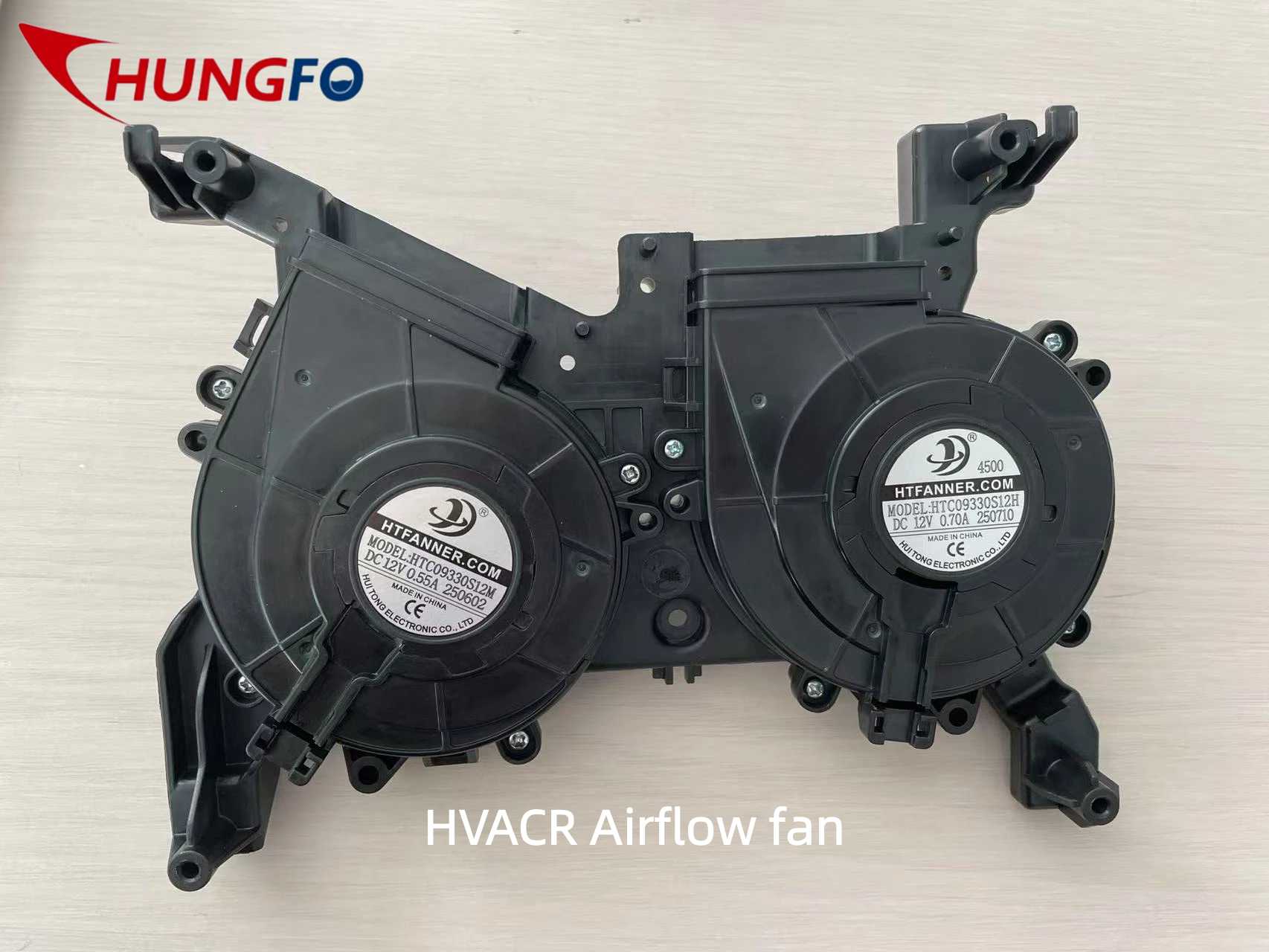
Chungfo Fan brings decades of specialized motor and fan manufacturing expertise to the global HVACR industry. Certified to international safety and quality standards including UL, CE, and CCC, our product portfolio spans rugged shaded pole motors,dc centrifugal fan, and high-efficiency EC blower fan solutions engineered for long service life under demanding conditions. Whether you require standard drop-in replacements for aftermarket maintenance or customized airflow assemblies for OEM equipment production, our engineering team is ready to support your project.